July 8, 2026
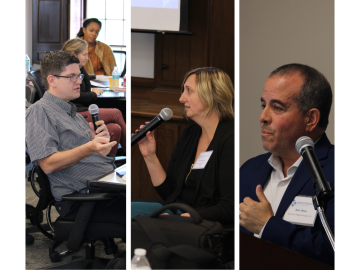
The Health Center Controlled Network’s Learning and Networking Workshop in early June brought together professionals from Federally Qualified Health Centers near and far. Here, three participants reflect on what they learned at the two-day event.
***
Eric Rios
Chief Information Officer, Spectrum Health Services
Question: How long have you been in your current role?
Answer: CIO at Spectrum for 3.5 years.
Q: How did the 2026 HCCN Workshop help to foster connections and conversations with colleagues at other health centers? Could you share what you learned or benefited from in those interactions?
A: The 2026 HCCN Workshop fostered strong connections with colleagues across health centers by creating opportunities for open dialogue and shared learning. Through these interactions, we gained valuable insights into processes and best practices used by other organizations that could be adapted to strengthen operations at Spectrum and across the network.
At the same time, we were able to share our own experiences, particularly around innovation. During my presentation, several health centers expressed interest in how we are leveraging AI and its impact on efficiency and care delivery, leading to meaningful follow-up conversations.
Overall, the workshop strengthened collaboration, expanded our network, and provided practical ideas we can apply moving forward.
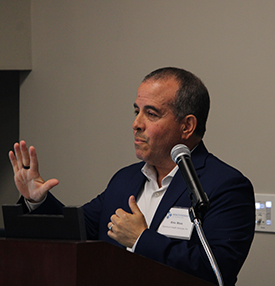
Q: Operationalizing AI: From Implementation to Impact prompted robust discussion at the Workshop. From your perspective as a panelist, what aspects of the conversation were most meaningful, and what do you hope health centers take away from it? Did you have any new takeaways from the discussion?
A: As a panelist, one of the most meaningful aspects of the discussion was reinforcing the point that AI is not intended to replace staff but to enhance and support them. Positioning AI as a “thought partner” resonated strongly, helping teams streamline day-to-day tasks and reduce administrative burden.
We emphasized that work that once took hours can now be completed in minutes, allowing staff to refocus their time on higher-value priorities, particularly patient-centered initiatives. I hope health centers take away that AI can be adopted in a practical, responsible way to improve efficiency without sacrificing the human element of care.
A key takeaway for me was the strong interest from peers in how to operationalize AI in real workflows. It highlighted the importance of not just implementing AI tools but embedding them into daily operations in a way that drives measurable impact and supports staff adoption.
Q: Throughout the sessions, best practices and experiential learning regarding technology/technological implementation were common threads. Is there a best practice (or something to avoid) in this realm that you feel you can bring back to your health center?
A: While Spectrum is already a leading innovator in implementing new technologies, one valuable takeaway was hearing how other health centers are driving strong performance in specific quality measures. The discussions provided insight into the strategies and workflows they’ve implemented to achieve those outcomes.
Although there were no major shifts in our current approach, these conversations reinforced the importance of continuously evaluating performance and identifying opportunities to adopt targeted best practices that could further enhance results at Spectrum.
Q: Would you mind telling us what you enjoyed most about the sessions and/or about any key takeaway(s) from the meeting?
A: What I enjoyed most about the sessions was the strong sense of connection and camaraderie among health centers. The interactions felt collaborative and supportive, with everyone willing to share experiences and learn from one another.
It was also great reconnecting with colleagues I’ve worked with in the past—it felt like a reunion in many ways. A key takeaway is that these relationships are just as valuable as the content itself, as they strengthen ongoing collaboration across the health center community.
***
Joshua Warfel
Chief Information Officer, River Valley Health
Question: How long have you been in your current role?
Answer: Two years
Q: How did the 2026 HCCN Workshop help to foster connections and conversations with colleagues at other health centers? Could you share what you learned or benefited from in those interactions?
A: The workshop allowed me to have in-depth discussions with peers about how we are all solving logistical/technical challenges.
Q: Operationalizing AI: From Implementation to Impact prompted robust discussion at the Workshop. From your perspective as a panelist, what aspects of the conversation were most meaningful, and what do you hope health centers take away from it? Did you have any new takeaways from the discussion?
A: The presentations and discussions that followed were very enlightening. It was nice to see that we were all heading in the same direction yet had taken our own paths. Overarching, I'd hope that health centers know they are not alone in navigating new innovations/opportunities. I feel that other health centers could have benefited from the collaborative effort occurring earlier than it had.
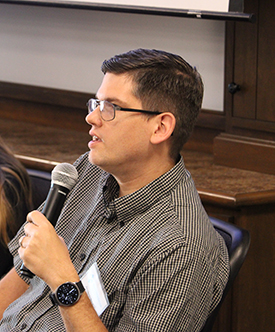
Q: Throughout the sessions, best practices and experiential learning regarding technology/technological implementation were common threads. Is there a best practice (or something to avoid) in this realm that you feel you can bring back to your health center?
A: The best practice for this, overwhelmingly, has been to ensure that all areas of your health center are involved early on when working with innovations. The workflow/environment needs to drive the tech, and not the other way around. Pooling our knowledge and experience together with other health centers can help streamline and focus this process.
Q: Would you mind telling us what you enjoyed most about the sessions and/or about any key takeaway(s) from the meeting?
A: I enjoyed the Q&A sessions and one-on-ones with my peers. HCCN did a great job of "planting the seeds" for continuing thoughts and discussions. I believe some more time for Q&A and structured networking during the meeting would have been beneficial.
***
Kara Poremba
Chief Quality Officer, Wayne Memorial Community Health Center
Question: How long have you been in your current role?
Answer: I have been in my current role for just under 4 years and with WMCHC for 12 years.
Q: How did the 2026 HCCN Workshop help to foster connections and conversations with colleagues at other health centers? Could you share what you learned or benefited from in those interactions?
A: The HCCN events are always interactive and include opportunities for us to learn from other health centers. For me, the most valuable part of that is knowing that we are not alone in our challenges and being able to gain strength in numbers. We need to band together to influence vendors and payers to come to the table to better support FQHCs.
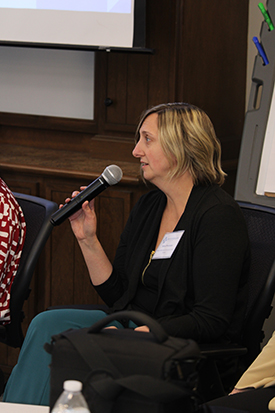
Q: Operationalizing AI: From Implementation to Impact prompted robust discussion at the Workshop. Were there any takeaways from that session or regarding AI in general that you found thought provoking or constructive?
A: We will definitely be looking at an AI governance policy!
Q: Throughout the sessions, best practices and experiential learning regarding technology/technological implementation were common threads. Is there a best practice (or something to avoid) in this realm that you feel you can bring back to your health center?
A: For me the best practice of continuous data validation and mapping updates for Azara was the most beneficial. It gave me a lot to think about in terms of our long-term strategies for maintaining data integrity.
Q: Would you mind telling us what you enjoyed most about the sessions and/or about any key takeaway(s) from the meeting?
A: I thought the tabletop cybersecurity exercise was great!! It solidified for me the need for communication flow, structured responsibility for decision-making and information escalation.
***
This program is supported by the Health Resources and Services Administration (HRSA) of the U.S. Department of Health and Human Services (HHS) as part of an award totaling $3,615,000 with 0% financed with nongovernmental sources. The contents are those of the author(s) and do not necessarily represent the official views of, nor an endorsement, by HRSA, HHS, or the U.S. Government. For more information, please visit HRSA.gov.
--
About the Health Federation of Philadelphia
The Health Federation of Philadelphia is a public health nonprofit that promotes community health by advancing access to high-quality, integrated, comprehensive health and human services.
The Health Federation of Philadelphia serves as a keystone supporting a network of Community Health Centers as well as the broader base of public and private-sector organizations that deliver healthcare, public health and human services to vulnerable populations.