March 31, 2026
Thanks to the combined efforts of the City of Philadelphia’s eight health centers operated by Ambulatory Health Services, with crucial support from National Health Corps patient advocates, $3.4 million in prescription medication costs were saved in fiscal year 2025.
The eight city health centers provide primary medical and support services to patients, and 47% of them are uninsured. The health centers have onsite pharmacies at each location, but there are times when patients, both with insurance and without, need a medication that is not available onsite.
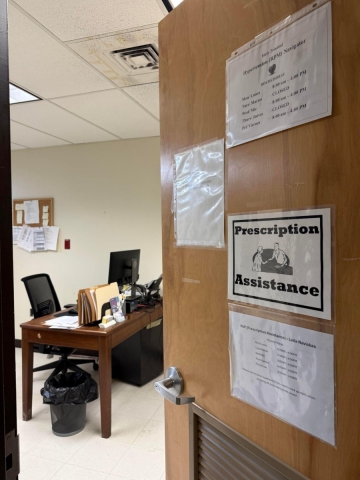
That’s where the Patient Assistance Program comes in. Each health center is staffed by a National Health Corps member who serves as a patient advocate, meeting with patients, helping them to determine if a medication can be ordered through a manufacturing pharmaceutical company’s patient assistance program, and helping patients apply for their medications.
This is an often complicated process involving collection of paystubs, insurance denial letters, proof of residency, and other information. Once a patient is successfully enrolled, the patient advocate coordinates the dispensing of medication, ordering of refills, and application renewals.
The Patient Assistance Program, which began at city health centers around 2007, provides crucial support to patients, said Dr. Sarah Johnson, Medical Director of Ambulatory Health Services for the Philadelphia Department of Public Health.
“The importance of the Patient Assistance Program at the health centers cannot be emphasized enough—without PAP, many of our patients would be unable to access critical but often astronomically expensive medications,” Johnson said. “We have seen firsthand the benefits PAP provides to our patients: better control of their diabetes and therefore prevention of complications, curing hepatitis C infection, and controlling their lifelong autoimmune conditions, just to highlight a few examples.”
August Blatney, an AmeriCorps Member with National Health Corps Philadelphia host sites Philadelphia Department of Public Health Health Center 9 and Strawberry Mansion Health Center, is currently serving as a patient advocate.
“Our support for patients is ongoing,” Blatney said. Once enrolled, patients typically remain in the program for one year and receive their medications free of charge, but after the year is up, they must re-enroll to continue receiving their medications.
“Over time, my contact with patients increases as I help them apply for programs, notify them when their medications arrive, assist with refills, and help them re-enroll when necessary,” he said. “Because of this, I get to know many of my patients quite well. I have really enjoyed building relationships with them over the past year and developing meaningful connections while helping them access the medications they need.”
In fiscal 2025, 436 applications were submitted for prescriptions under the program from the health centers.
Through the program, patients are able to access medications that otherwise would be prohibitively expensive, such as treatments for hepatitis B and C, injectable GLP-1 medications to treat diabetes, HIV prevention medication, and treatments for autoimmune conditions, to name a few.
Johnson said there are hundreds of different patient assistance programs available through pharmaceutical companies, but about 20 of those pharmaceutical companies make up the bulk of health center patient applications.
Blatney said that there are many challenges facing patients who need often-expensive medications. Most prescription assistance programs have income requirements, and some patients exceed the threshold, are employed but are not offered insurance from employers and can’t afford private insurance. Some patients who have Medicare or Medicaid still struggle with out-of-pocket costs, he said. Administrative and communication challenges persist as well.
Often, patients have to fill out lengthy paper forms, guidelines can change frequently, and programs can take a long time to approve or deny an application.
Despite these limitations, Blatney said, “These programs provide an essential service to many patients who would otherwise be unable to afford their medications. They help reduce costs for both patients and healthcare providers and play a vital role in our community health centers. PAPs allow many people to access medications that they otherwise would not be able to obtain.”
National Health Corps members serve in their role for 46 weeks. The Health Federation of Philadelphia serves as the parent organization of National Health Corps.
National Health Corps is part of the AmeriCorps network of national service programs. The week of March 9-13 was celebrated as AmeriCorps Week 2026, which recognizes the millions of Americans who have chosen to serve their country through AmeriCorps and encourage others to follow in their footsteps.
Johnson said that, from the city health department’s perspective, “Our Americorps members are vital to ensuring the success of this program, as they handle all of the day-to-day tasks and provide service to each patient with the utmost sensitivity and care. We expect that the needs of our patients will only continue to increase in the years to come, and we are grateful that our dedicated AmeriCorps patient advocates ensure we can continue to carry out our mission of providing care for medically underserved Philadelphians."
Blatney, a Philadelphia native who plans to start medical school in the fall, says he has gained valuable experience working with patients at the city health centers.
“I have significantly improved my communication skills and learned how to assess patients’ needs so that I can either assist them directly or connect them with someone who can help,” he said. “And I learned a great deal about the importance of Federally Qualified Health Centers and other community clinics that serve as the backbone of care for many underserved populations. Seeing the vital role they play in providing accessible care has been incredibly meaningful.”
About National Health Corps
National Health Corps (NHC) advances community health by providing critical education, care coordination, and essential services, while transforming systems through policy, procedure, and practice change.
We partner with health, social service, education, food, and legal organizations to implement innovative solutions to our nation’s most pressing health problems, while developing a pipeline of frontline and community-based healthcare and public health leaders.
Over the past 32 years, the NHC has trained and deployed more than 3,200 individuals who have served more than 3.5 million people in rural, urban and suburban communities.
About the Health Federation of Philadelphia
The Health Federation of Philadelphia is a public health nonprofit that promotes community health by advancing access to high-quality, integrated, comprehensive health and human services.
The Health Federation of Philadelphia serves as a keystone supporting a network of Community Health Centers as well as the broader base of public and private-sector organizations that deliver healthcare, public health and human services to vulnerable populations.